
It is 6 AM, and the HR manager’s office is quiet except for the hum of the coffee machine. The team leader sits at her desk with a mug, a notebook and a print‑out of the upcoming HR transformation schedule.
The meeting with senior management is in two days. She looks at the stack of HR strategy documents and feels the familiar mix of excitement and apprehension.
In her journal she writes: “Are we really ready for this HR transformation?”
This question is more than a rhetorical thought. It reflects the lived experience of HR professionals who stand between big ideas and the people expected to make those ideas real. Time pressure, business goals and potential risks weigh heavily, and the success of the change depends on understanding the organization’s current readiness rather than simply marching ahead.
In this article we walk through practical steps to assess your organization’s readiness for HR transformation.
Why leaders think about change readiness first
Business owners and managers usually see the first signs of trouble long before the big transformation begins. There may be confusion in teams, mixed messages coming from senior leaders, or old habits bumping against a new environment.
These observations show up in daily work. When leaders talk about change readiness, they mean the degree to which their people, systems and culture can adopt a successful transformation. Skipping this step can lead to false starts, wasted budgets and employee frustration.
The goal is to evaluate whether people are prepared to adopt and sustain a proposed change, and success depends on people readiness rather than a solid plan alone. A readiness check identifies resistance points, skills gaps, communication blind spots and cultural hurdles before they derail the initiative.
Looking at the whole picture with a change readiness assessment
What is a change readiness assessment? It's a practical tool that HR leaders use to evaluate how prepared their organization, teams and individuals are to adopt and sustain a proposed change.
Unlike a change impact assessment, which maps what will change and who it will affect, a readiness assessment evaluates capability, mindset and leadership alignment.
What a readiness check looks at
A comprehensive assessment reviews seven areas:
- Awareness and understanding. Do people know what’s changing and why? A readiness assessment gauges whether employees understand the purpose, scope and urgency of the change.
- Motivation / desire. Do people want the change? The assessment explores attitudes and appetite for change.
- Capability / know‑how. Do employees and leaders have the skills, behaviours and knowledge to operate in the new environment? A readiness check identifies training gaps and role clarity.
- Support / leadership. Is leadership aligned and actively championing the change? People look to leaders for cues; the assessment checks whether leaders are communicating a unified message and removing obstacles.
- Resources and capacity. Do teams have time, tools and bandwidth for the change? Assessments examine whether teams are overextended or if dedicated resources exist.
- Culture and communication. Does the organizational culture nurture trust and two‑way communication? A readiness check looks at whether there is psychological safety for employees to raise concerns.
- Commitment. Will the change stick? The assessment explores reinforcement structures such as incentives, accountability and performance metrics.
Readiness is not a one‑time checkpoint but an ongoing process embedded throughout the transformation journey. This means readiness must be revisited at different points of the implementation phase and adjusted as lessons arise.
Using a change readiness assessment template as a starting map
A change readiness assessment template is a structured set of questions and categories used to evaluate an organization’s readiness. It helps leaders remember key areas and maintain consistency across departments.
We recommend tailoring questions to the specific change, focusing on the seven aspects of readiness, and using both qualitative and quantitative methods.
What usually sits inside a readiness assessment template?
- Questions for leaders about leadership support, leadership aligned messaging and resource allocation.
- Questions for the HR team about HR strategy, capacity, processes and confidence in guiding the change.
- Questions for employees about awareness, motivation, trust and skill gaps.
Data collection should include basic organizational data, past change successes and failures, current metrics to establish baseline metrics and measures of employee skills and attitudes. This baseline metrics step is vital because it gives you a clear starting point to compare progress later on.
How change management thinking supports the journey
Change management is the structured approach that helps organizations transition from the current state to a desired future state. It links planning, timing and people reactions to the daily work of teams.
Organizations that regularly conduct readiness assessments and adapt their change strategies experience lower levels of change fatigue, higher employee engagement and improved project outcomes.
When leaders approach change with a robust management plan, they can gather input from the HR team, employees and stakeholders, and they can adjust timing and resources accordingly. The assessment becomes part of the change management plan and informs training, communication and resource allocation.
Small story: when a change process had no clear owner
In one organization I worked with, a major system upgrade failed because there was no single person accountable for the change process.
Each department believed another was leading the project. Without clear ownership, tasks slipped and messages were inconsistent.
After we assigned a change leader and created a simple timeline, progress picked up. Having a dedicated owner and supportive culture is part of sound change management.
The view from HR leaders and senior tables
What keeps HR leaders awake at night? There is a major gap between the 87% of HR leaders who recognize the need for HR transformation and the 27% who have a fully integrated strategic plan.
HR leadership collaboration and commitment to continuous improvement are critical to future‑proof HR strategies.
Key concerns include:
- Trust. Employees must trust that leaders will support them through uncertainty. Without trust there is little psychological safety.
- Skills. Many HR functions still lack the digital skills and change management capabilities required for transformation.
- Pressure from senior leaders. HR departments are often asked to deliver outcomes quickly without time to assess readiness.
- Leadership alignment. Misalignment among senior management can send mixed messages to teams.
These worries underline why leadership alignment is a repeated theme in readiness assessments. When managers and executives speak with one voice and commit to the same actions, employees know where to look for guidance.
What really moves in an HR transformation
HR transformation involves a mindset shift, culture shifts and evolving roles. Digital HR goes beyond automating processes – it is about redefining the employee experience, improving efficiency and enabling strategic outcomes.
A culture of continuous learning and agility is also key. In practice this means embedding digital fluency into training programs and preparing employees for roles that combine human judgment with machine intelligence.
HR professionals must focus on upskilling, leadership development and strategic alignment so that the transformation results in a resilient, people‑centric operating model.
How to assess readiness without making it complex
If the idea of a readiness assessment feels overwhelming, think of it as a structured conversation rather than a massive project. Follow these 7 steps:
- Clarify purpose and scope. Define what is changing and why. Draft a one‑page summary outlining goals, affected teams and success measures.
- Map out key stakeholders. Identify everyone directly or indirectly affected, including union representatives or external partners.
- Gather data for the assessment. Use surveys, interviews, focus groups and observations to collect insights. We recommend collecting company data, past change successes/failures and current metrics to establish baseline metrics.
- Analyze results. Look for patterns, readiness gaps and strengths. Identify top gaps and strengths using simple heatmaps.
- Prioritize issues and opportunities. Categorize findings into immediate blockers, planned actions, quick wins and long‑term opportunities.
- Develop a change management plan. Tie interventions such as training and communication directly to the readiness gaps and assign responsible owners.
- Review and refresh. A readiness assessment is not done once. Use feedback loops after each implementation phase to gather lessons and adjust.
From our experience, you can begin with three simple steps: listen to people, look at existing data and talk to key stakeholders.
- Listening includes running quick surveys and focus groups.
- Looking at data means reviewing turnover, performance, and engagement trends.
- Talking to stakeholders gives context you may miss in numbers alone.
This approach keeps the assessment grounded and avoids unnecessary complexity.
Listening to the voice of the HR team
The readiness of the HR team itself matters. HR professionals are both drivers of change and people experiencing it. They juggle administrative tasks, employee concerns and transformation work. HR is the least satisfied function with the volume of administrative tasks.
Without freeing up capacity or reskilling the HR team, they cannot lead change effectively.
In readiness assessments, ask HR team members about their workload, skill gaps and support needs.
Evaluate whether the team has the knowledge to run the upcoming change, or whether they need development programs.
Employee skills within the HR function should be part of the baseline data collection.
Picking the right assessment tools
Assessment tools help collect, analyse and act upon readiness data. You can pick from different solutions, such as:
- Readiness surveys used to gather quantitative data about awareness, attitudes and confidence.
- Interviews and focus groups conducted to explore underlying concerns and historic experiences.
- Workshops organized to brainstorm solutions, co‑create goals and practise new behaviours.
- Analytics platforms looking to visualize metrics and identify trends.
- Project management and collaboration tools designed to keep tasks and communication organized.
When reviewing results, look for real data, not just opinions. Compare key indicators such as engagement scores, turnover rates and productivity before and after interventions.
Good tools highlight patterns and help you decide whether to proceed with the upcoming change or adjust your implementation process.
Understanding individual readiness in times of change
Readiness is not just about organizations but also about individuals. Individual readiness reflects the employee’s confidence, motivation and perceived capability to succeed in the new environment.
When employees believe they have the right skills, tools and support, adoption accelerates.
Conversely, when readiness is low, resistance grows and productivity dips.
Emotional and practical sides of change
An individual’s reaction to change has emotional and practical dimensions.
- The emotional side includes stress, fear of the unknown and perceived loss of status.
- The practical side includes whether they know how to use new systems or adapt processes.
Psychological safety – the shared belief that it is safe to take interpersonal risks – is essential for people to speak up during change. In a psychologically safe workplace, employees feel at ease offering ideas, sharing different viewpoints, asking questions or admitting mistakes without fear of punishment.
When readiness assessments include questions about psychological safety, leaders can address barriers early.
Building a habit of continuous improvement
Readiness is part of a continuous improvement cycle. Leadership collaboration and commitment to continuous improvement are critical. In practice, this means establishing feedback loops, reviewing outcomes after each change effort, and adapting processes based on what worked and what did not.
An organization with a culture of learning and open feedback builds resilience. It's good to embed continuous learning into training and reshaping HR strategy around agility.
After each implementation, gather input from employees and the HR team about what supported or hindered adoption. Use this feedback to refine training, adjust communication and plan for the next iteration.
Checking employee skills for the new operating model
Assessing employee skills is a core part of readiness. Data collection should include current metrics to establish baseline metrics and information on employees’ skills, competencies and openness to training.
This step helps identify skill gaps and informs targeted development programs.
Questions to consider:
- Which skills are critical for the new operating model?
- What development programs exist to close gaps?
- How will you support continuous learning once the change is live?
Gallup’s research shows that business units with actively engaged employees have 21% higher profitability and 17% higher productivity than those with disengaged workers. Investing in skills and engagement therefore translates into better business results.
The role of human resources in shaping the change story
Human resources plays a central role in any transformation. HR is the bridge between senior leaders and employees. Trust and psychological safety are foundations of healthy, high‑performing teams.
HR leaders must cultivate trust and create spaces where employees can express concerns without fear.
HR also drives communication. Clear, two‑way communication lets employees understand the upcoming change, see how it connects to business goals, and know whom to approach with questions. Making communication clear and consistent across multiple channels (emails, town halls, FAQs) helps prevent confusion.
Key questions to ask before moving forward
Before approving the implement change decision, pause and reflect on these key questions:
- Is leadership aligned? Is there a shared understanding and commitment among senior leaders and frontline leaders?
- Do employees understand the upcoming change? Are people aware of what will change, why and how it affects them?
- Is there leadership support and a clear change strategy? Are resources, timelines and ownership clearly defined?
- Are baseline metrics and key indicators clear? Have you established a starting point for comparison, covering metrics such as engagement, turnover, productivity and employee skills?
- Have you gathered input from key stakeholders? Have you engaged representatives from various departments, including unions, HR team, business unit leads and external partners?
- Do you know the culture’s level of psychological safety? Can people speak up and question plans without fear?
- Have you reviewed past change efforts? What worked, what failed, and why?
These questions form a mini‑framework to move from organization's readiness to long‑term success. They help you connect readiness to business outcomes, align the change plan with strategic goals and keep the focus on people.
Mini‑framework: from current readiness to long term success
- Establish baseline metrics. Collect data on engagement, turnover, productivity, skills and other relevant indicators.
- Gather input from key stakeholders. Run focus groups, interviews and surveys.
- Check organizational culture and psychological safety. Gauge trust levels and communication norms.
- Review change initiatives and change efforts so far. Understand lessons learned and adjust accordingly.
- Link readiness for change to business goals and business outcomes. Make sure that the change aligns with broader strategic objectives.
Common warning signs of low readiness
- Low trust – employees are reluctant to speak up or share ideas transparently.
- No clear communication plan – messages are inconsistent or absent.
- Weak leadership alignment – leaders send mixed signals or fail to provide support.
- Limited problem solving culture – teams avoid addressing issues openly.
- Signs of employee resistance – cynicism, avoidance, rumour‑spreading or withdrawal.
Recognizing these signs early lets you address them through targeted interventions, such as training sessions, leadership workshops and focus groups.
Where Unrubble fits
An HR transformation lives or dies on organizational readiness, not just ambition.
Before a big planned change, you need a clear understanding of what’s happening on the ground:
- who’s overloaded,
- where the bottlenecks are,
- and which processes are quietly breaking.
That’s where Unrubble helps.
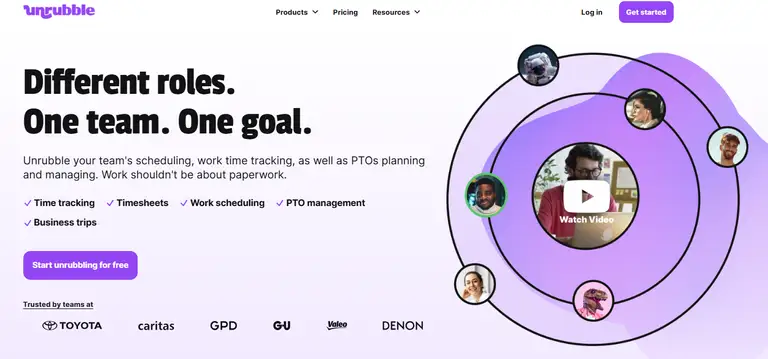
Thanks to centralising time tracking, scheduling, PTO, timesheets, business trips, and self-service requests, Unrubble turns everyday activity into data driven insights you can use as baseline signals for your readiness assessment.
Instead of guessing capacity or relying on anecdotes, you can see patterns in approvals, absence trends, and workload distribution, supporting smarter risk mitigation and better prioritisation.
And when you’re heading into a new system implementation, Unrubble reduces change friction by keeping the “people logistics” simple. Employees can request time off, view schedules, and manage travel in one place. All this helps you equip employees with clarity, reduce admin noise, and protect momentum.
The payoff is real: fewer avoidable frustrations, stronger talent retention, and a smoother path to adoption, so your transformation becomes a competitive advantage, not another drain on capacity.
Don't wait - try Unrubble for free now.
Conclusion: A calm step before the big move
The scene returns to the quiet office. The HR manager closes her notebook, no longer overwhelmed but focused. She knows that readiness is not about having a perfect plan on paper - it is about understanding people, capacity, and the reality of daily work before asking the organization to change.
By gathering real data, listening carefully, and linking readiness to business outcomes, leaders give transformation a far better chance of success. A readiness assessment is not a delay - it is the foundation that turns ambition into sustainable progress.
And this is where the right tools make a difference. Unrubble gives HR teams the visibility and structure they need to spot bottlenecks, free up capacity, and support change with confidence. Less admin noise, clearer insights, and smoother coordination help your people focus on what truly matters during transformation.
If you want to move into your HR transformation with clarity instead of guesswork, start by getting control of the everyday operations that shape readiness.
Try Unrubble for free and give your HR team the solid footing they need for change.

![How To Evaluate HR Transformation Effectiveness [2026 Guide]](/static/image?src=https%3A%2F%2Fcdnblog.unrubble.com%2Fpayload-unrubble-images%2FUnrubble-how-to-evaluate-hr-transformation-effectiveness-2026-guide-180x120.jpg&width=128&height=128&fit=cover&position=center&quality=65&compressionLevel=9&loop=0&delay=100&crop=null&contentType=image%2Fwebp)