
It is a cool morning, and the HR manager of a small company sits at a desk with a mug of coffee. The notebook in front of them shows lists of tasks, decisions and notes about a planned partnership with an external HR service.
They think about pressure on their small team, the time it takes to handle day‑to‑day queries and the risk of mistakes when dealing with people.
A question sits in bold at the top: “Which HR work must stay in the business?” This internal dialogue sets the scene for exploring what HR functions should not be outsourced.
Today we want to show you which certain human‑centred tasks are better kept close to home as part of your organisation’s health.
Understanding core HR functions
Human resource teams handle many activities: recruiting, training, performance reviews, payroll and benefits.
Business owners sometimes see HR as a collection of HR tasks that can be handed over to save money. However, some work relates directly to relationships and values. According to HR experts at G&A Partners, personal matters such as conflict resolution, performance reviews and decisions about promotions or terminations should be managed by your internal team.
These activities require context and understanding of the people involved. External advisers may give advice, but final decisions belong to leaders.
Protecting company culture and values
Culture shapes daily behaviour and guides the organisation’s path. The propagation of core company culture and values must be kept in‑house. Cultural underpinnings are unique and need internal stakeholders who live and embody them every day.
When new employees join, they pick up on how managers speak, how decisions are made and how conflicts are resolved.
An outside provider may not capture these subtle signals. Keeping culture stewardship inside supports alignment between senior management and frontline teams. It also reduces the risk of miscommunication and loss of institutional knowledge.
Seeing the limits of HR outsourcing
Entrepreneurs often outsource to save time or access specialised tools. But outsourcing also has downsides as it can lead to a loss of personal touch with employees.
Employees may feel distanced and disengaged if their concerns are handled by external professionals who do not fully understand the company culture.
External HR may feel impersonal and corrections take longer to make. A third‑party firm handles many clients, so your request might sit in a queue. Recruitment may also suffer because external partners cannot read cultural fit as well as an internal recruiter.
Why benefits administration still needs a human face
Benefits such as health insurance and retirement plans involve personal choices and emotions. An outside firm can support benefits, share best practices and help employees understand their packages.
However, employees still want to speak with someone they know when they have questions. If all benefits queries go through an external partner, there is a risk of losing the personal support that helps employees make decisions.
Employees might get frustrated if they must wait for answers, which could harm morale. For this reason, benefits conversations should stay connected to an in house HR person even if certain processing tasks are managed by a partner.
The value of keeping key roles in house
Having an internal team offers speed and context. When an issue arises, such as an unexpected absence or an interpersonal conflict, an internal HR person can walk down the hall, listen and act.
External providers work offsite and may take time to respond. Miscommunication and delays can occur because of organisational separation.
Internal control of sensitive information also reduces the risk of data breaches and confidentiality issues. In‑house staff protect private data and maintain trust. They understand long‑term goals and adjust HR practices to support growth.
Building employee engagement within the company
Engagement grows through daily interactions, not only through surveys. Keeping employee engagement and development internal helps leaders understand individual aspirations and challenges.
Tailored development plans and supportive work environments come from relationships with managers and the HR team.
Outsourcing such work may dilute emotional signals, making it harder to spot early signs of disengagement or burnout. An internal team reads non‑verbal cues and checks morale through informal conversations.
Limits of external HR services
Outsourced services often cover payroll processing, compliance checks and other administrative work. However, service contracts rarely consider history, team politics and subtle context.
While external providers bring expertise, they do not fully understand your values and ethics. A partner may process tasks but cannot decide on matters of trust. It is wise to treat such providers as support rather than replacements.
Leaders should stay involved in decisions that affect people’s lives.
Keeping the employee handbook alive and relevant
An employee handbook is more than a static document. It outlines expectations, behaviour norms and company policies.
Because these rules reflect the business’s values and industry context, they should be drafted and reviewed by an internal team. External partners may supply templates, but the internal HR department should customise them to align with culture and legal obligations.
In this sense, the handbook is a living story managed by your HR team.
Handling employee relations close to the heart of the company
Sensitive conversations about performance, behaviour or personal problems require trust. Sensitive employee relations and conflict resolution demand trust and confidentiality.
Successful resolution requires understanding organisational dynamics and an empathetic approach. When outside providers handle such issues, employees may worry about privacy.
Personnel matters like conflict resolution and performance reviews should remain internal. Leaders and HR staff know the individuals involved and can make fair decisions.
Taking ownership of conflict resolution
Conflict is natural in organisations. Resolving it requires listening, context and fair judgment. External providers can mediate, but they lack the daily connection with people.
Using an outside firm can feel impersonal and that corrective actions may be delayed. An internal team can intervene quickly, organise private meetings and follow up. They can also spot patterns and offer coaching to prevent issues from recurring.
The broader role of human resources in leadership
HR is not just a service department; it is a partner in business planning. Internal HR teams support senior management by aligning people strategies with business objectives.
In‑house HR departments are better at tailoring practices to achieve broader goals. They adjust practices to match growth plans and help maintain long‑term health. By contrast, external partners often focus on delivering transactions rather than strategic advice.
When cost effective decisions create hidden risks
Outsourcing may appear cheaper than maintaining an internal team. However, there are hidden costs.
Outsourcing can lead to data breaches and confidentiality issues. Corrections take longer and employees may feel frustrated by the impersonal nature of outsourced services.
There is also a risk of losing institutional knowledge. In‑house teams remember past decisions, history and context - assets that are hard to price.
Reasons to keep background checks under your control
Conducting background checks on potential employees is an important part of risk management. The recruitment stage involves sensitive personal data.
In‑house background screening offers control over the process and confidentiality. Sensitive information remains within your organisation, reducing the risk of unauthorized access.
Outsourcing, on the other hand, means sharing personal data with a third party, which may raise security concerns. While external providers can bring expertise, many business owners prefer to handle screening internally for peace of mind.
Practical section: HR work that should stay managed internally
Based on these insights, here are examples of work that should remain within the company:
- Strategic and people‑critical areas such as values propagation and leadership alignment.
- Sensitive employee relations and conflict resolution involving performance reviews, promotions and terminations.
- Employee engagement initiatives that require daily interactions and trust.
- Ownership of the employee handbook, with revisions tailored to your industry and values.
- Background checks and other processes involving confidential information.
- Oversight of benefits packages and personal support for employees when choosing options.
- Performance evaluations and career development discussions.
Reflection box: questions for business owners
To decide which functions to outsource or keep inside, ask yourself:
- Which HR topics need personal trust and context?
- Where is deep knowledge of our culture more important than speed or cost?
- What institutional knowledge cannot be transferred to a vendor without risk?
- How will our choice impact morale and our long term success?
How Unrubble can support you
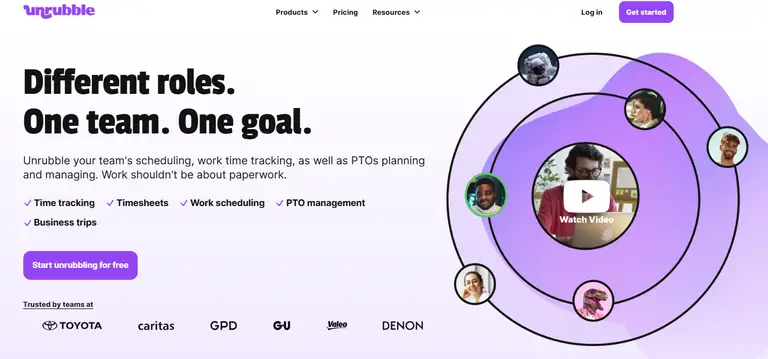
Deciding on outsourcing HR functions doesn’t have to mean handing over your people experience. The smartest approach is to stay in house for the work that protects culture, trust, and leadership decisions, and then use Unrubble to remove the busywork that makes HR feel time consuming.
Unrubble is built for day‑to‑day employee management:
- time tracking,
- scheduling,
- PTO tracking,
- timesheets,
- business trips,
- a Mobile Time Clock (with face recognition and anti‑spoofing),
- and an Employee Self‑Service App.
In other words, it streamlines the processes that sit behind reliable HR operations, without replacing the human judgement your team needs for certain functions.
Keep the people work internal, automate the admin
If you’re considering outsourcing human resources to a professional employer organization, an external HR provider, or an HR consultant, Unrubble gives you another option: keep strategic control while modernising the repetitive work.
Your leaders can focus on strategic tasks and core business activities, while Unrubble handles the administrative tasks that slow your week down.
With Unrubble, small business owners can centralise requests and approvals, reduce back‑and‑forth, and keep everyone on the same page.
All while helping them improve employee morale and overall workplace morale because employees always know where to look for schedules, time off, and travel info.
Practical benefits that make a difference
- Fewer “where is my request?” moments. A shared calendar keeps PTO, WFH, and business trips visible, so employees feel informed and supported.
- Cleaner records for payroll. Real‑time timesheets and exports make it easier to align with payroll services and reduce payroll errors.
- Built for compliance. Accurate time and leave records support labor laws requirements and strengthen legal compliance, helping ensure compliance issues are caught early and lowering the risk of non compliance.
- Faster decisions with the right context. Managers get dashboards for approvals and visibility across teams to ensure alignment with staffing needs and business operations.
- A better employee experience. Self‑service plus quick approvals respond to employee needs and create more room for meaningful coaching and development opportunities.
The right division of responsibilities
Unrubble is not a replacement for your people leaders. It’s the modern HR partner that helps your internal HR team stay close to the work that matters most.
Keep high‑trust HR conversations internal, guided by your ethical standards and your team’s specific knowledge of what’s happening on the ground.
Use Unrubble to reduce friction, minimise common HR issues, and keep your admin running smoothly as your business grows.
That’s how you get the best of both worlds: human‑centred decisions that stay in house, plus automated workflows that free HR experts to spend more time on culture, performance conversations, and employee performance management - without needing to outsource the heart of HR.
Conclusion: returning to the quiet desk
As the sun rises higher, our HR manager finishes reading notes. They close the notebook, feeling clarity about which functions should remain in house HR team responsibilities.
Tasks rooted in trust, culture, people development and confidential data are best managed internally.
Other HR services, such as payroll or routine tasks, may be outsourced to free up time thanks to tools like Unrubble.
Try it now free of charge and never wonder again what HR functions should not be outsourced.